Trending

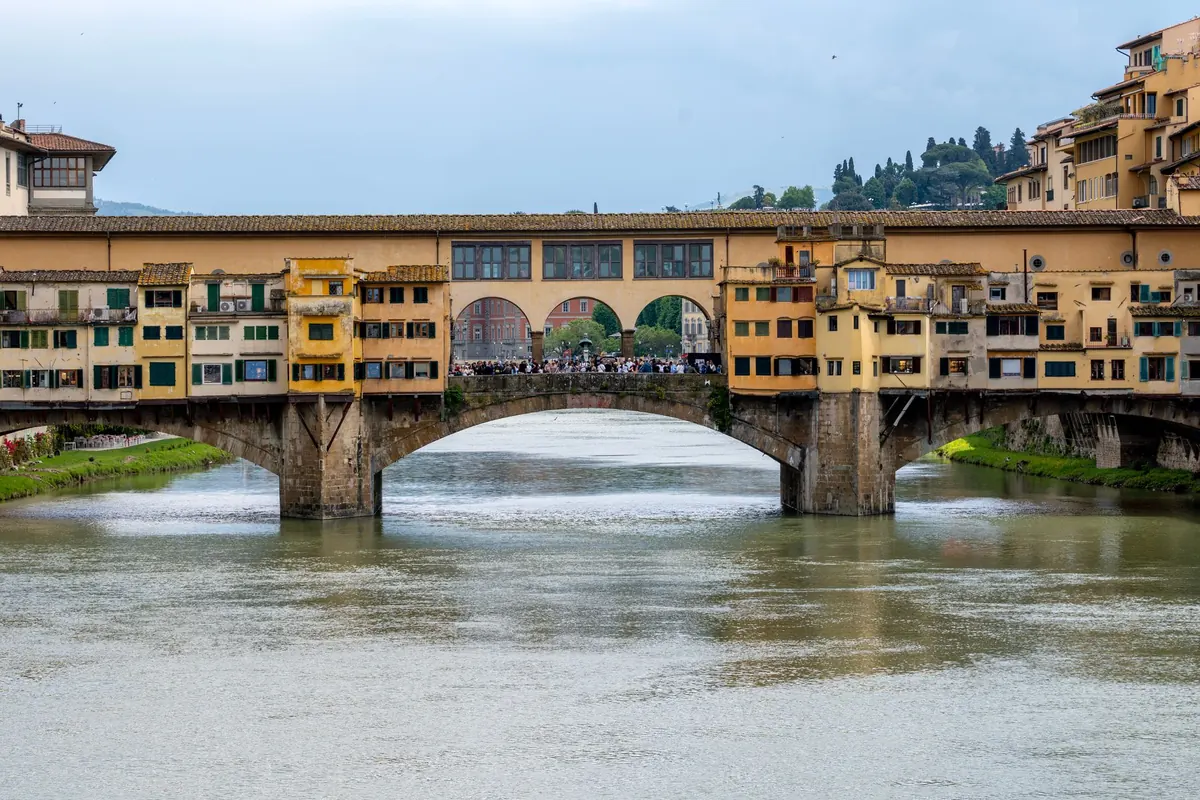
Drive an hour in Italy and the bridges change color. A squat brick arch outside Pavia gives way to a pale limestone span in the Apennines, then to a dark basalt crossing near Etna. This is not decorative fashion. It is geology, weather, transport, and local craft pressed into masonry. Once you notice the pattern, you can often guess where a bridge is — or where its stone came from — before you read the sign.
Bridge builders rarely hauled stone far if they could help it. Before trucks and railways, a quarry within a day’s cart ride shaped the budget. So the first question is not “What style?” but “What is under our feet?” In Lazio, that meant soft volcanic tuff and banded travertine; in Tuscany, sandstone and limestone; in the Alps, hard granite and gneiss. The result is a map you can read in color: warm ochre and grey in Rome, pale grey in the Veneto, dark volcanic rock in eastern Sicily.
Roman bridges show the rule clearly. Ponte Fabricius in Rome uses local tuff and travertine. Ponte di Tiberio in Rimini, a port city, uses pale Istrian stone brought across the Adriatic because the city had the trade links and the stone was tough enough for the job. Transport is part of the story, but so is climate. A porous stone that survives a dry Roman summer may crumble in an Alpine freeze-thaw cycle or a salt-laden lagoon.
The Po plain is a different world. Rivers deposit clay, not building stone, and for centuries the practical answer was brick. Lombard and Emilian builders became masters of it: thin bricks, broad arches, and long multi-arch bridges that spread the load across soft ground and wide floodplains. Brick also allowed curves and repairs without quarrying a single block. You see the tradition in the warm red-brown bridges of Pavia, Cremona, and Mantua, and in the brick-and-stone Ponte Coperto at Pavia, where the covered structure protects the deck from weather.
Verona’s Ponte Scaligero, though not on the plain itself, shows the same logic: a bold brick arch with white marble accents, built for strength and local pride. Brick is not a single material, either. Old hand-made bricks are softer and irregular; later machine bricks are harder and more uniform. Look closely at these bridges and you will find cutwaters on the piers, brick arches with stone rings, and patches where modern brick has replaced older, softer units.
In the Alps, bridges tend to be shorter and steeper because the valleys are. Granite and gneiss in Valle d’Aosta and Piedmont give piers and arch rings a speckled grey look, while timber bridges in Trentino-Alto Adige use larch and spruce where a light, quickly built span makes sense. The climate matters as much as the stone. Freeze-thaw cycles punish porous blocks, so mountain bridges often have wide copings, good drainage, and simple, robust details.
In the Apennines, limestone and sandstone produce the humpback bridges — ponti a schiena d’asino — that rise over small torrents. Their steep profile sheds water and debris, and their rough stonework often sits on living rock rather than deep foundations. Repair here is a local skill: you repoint with lime mortar that lets the wall breathe, not with hard cement that traps moisture. Timber bridges tell a similar story. A roof, good ventilation, and raised bearings matter more than a fancy joint, because water sitting in end grain is what shortens a wooden bridge’s life.
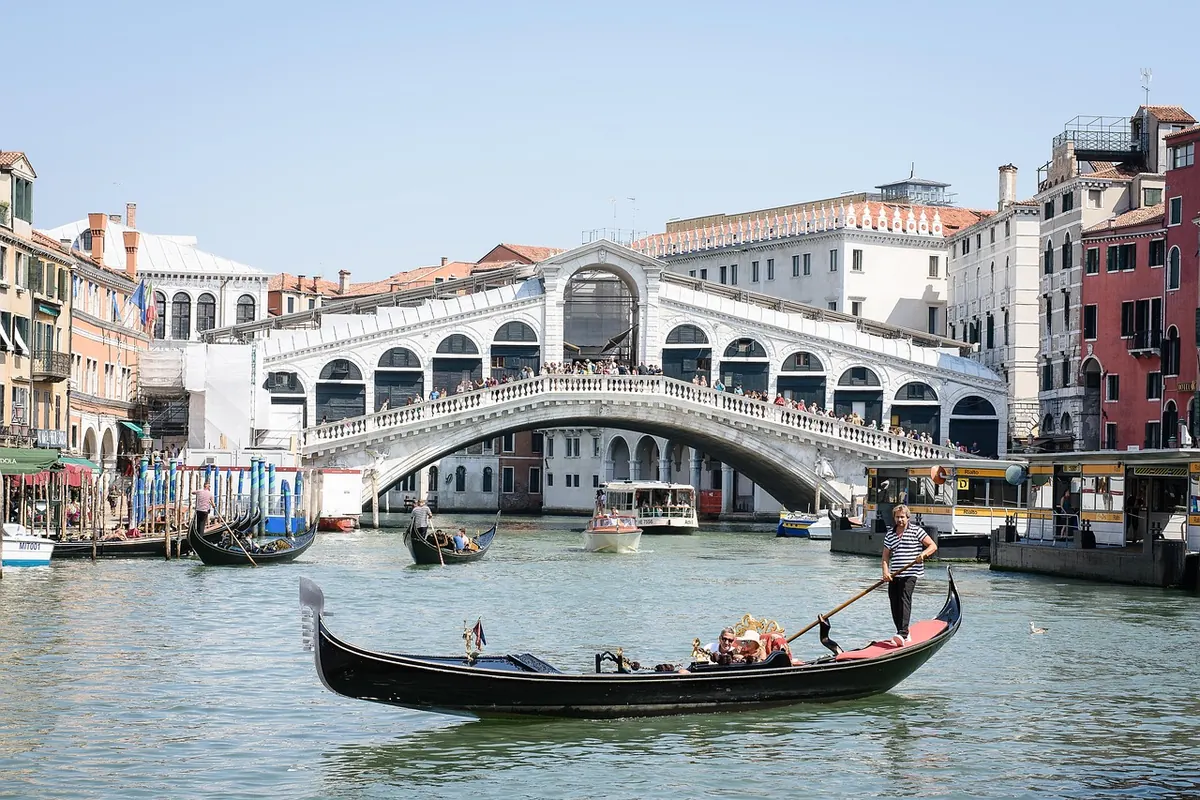
Salt air is a hard test. Venice solved it with Istrian stone, a dense, pale limestone that resists sea spray and takes a fine finish. The Rialto Bridge, with its single pale stone arch, is the famous example, but the same stone appears in quays, bridges, and thresholds across the lagoon. Liguria’s steep coast uses slate, limestone, and dry stone for short spans over ravines; the material is often dark, flat, and laid in thin courses. In Sicily, the geology splits visibly: dark basalt around Etna, pale limestone in the southeast. Sardinia’s granite gives many bridges a coarse, glittering surface that wears slowly.
On the coast, choose dense stone, simple profiles, and fewer porous details if you want a bridge to last. Salt crystals work into small cracks, and a fussy cornice or a soft, absorbent block gives them a place to start. That is why so many durable coastal bridges look plain: the decoration was sacrificed to the weather.
Materials explain a lot, but craft explains the rest. A local mason’s habits show up in the arch ring, the corner quoins, the parapet, and the way a bridge meets the bank. Lombard brickwork tends to be regular and finely jointed; Venetian stonework often uses large, smooth blocks with tight joints; Tuscan bridges may show pietra serena, a grey sandstone that darkens with age. In seismic areas, builders often favor robust piers, lighter upper walls, and tie rods or iron cramps to hold masonry together. None of this is a rigid rule, but it gives you something to test.
Use this quick list when you are standing on a bridge:
Start with the ground under the bridge. If you see clay slopes and brick, you are probably in the Po plain or a similar alluvial basin. If you see pale, fine-grained stone near a port or lagoon, think Istrian stone or a similar dense limestone. If the stone is speckled and coarse, granite is likely; if it is dark and vesicular, basalt. Then look at the shape: long, low, multi-arch bridges suit wide floodplains; short, steep arches suit
Photo: Ramaz Bluashvili / Pexels