Trending

Florence and Venice each hand you a bridge and quietly wait to see what you do with it. The Ponte Vecchio is a crowded jewellery street that happens to cross a river; the Rialto is a working market crossing with an arcade on top. They are often listed together, as if choosing between them came down to taste alone. It doesn’t. They reward different timing, different walking, and different expectations — and if your trip includes both cities, the order in which you meet them changes how much you enjoy the second.
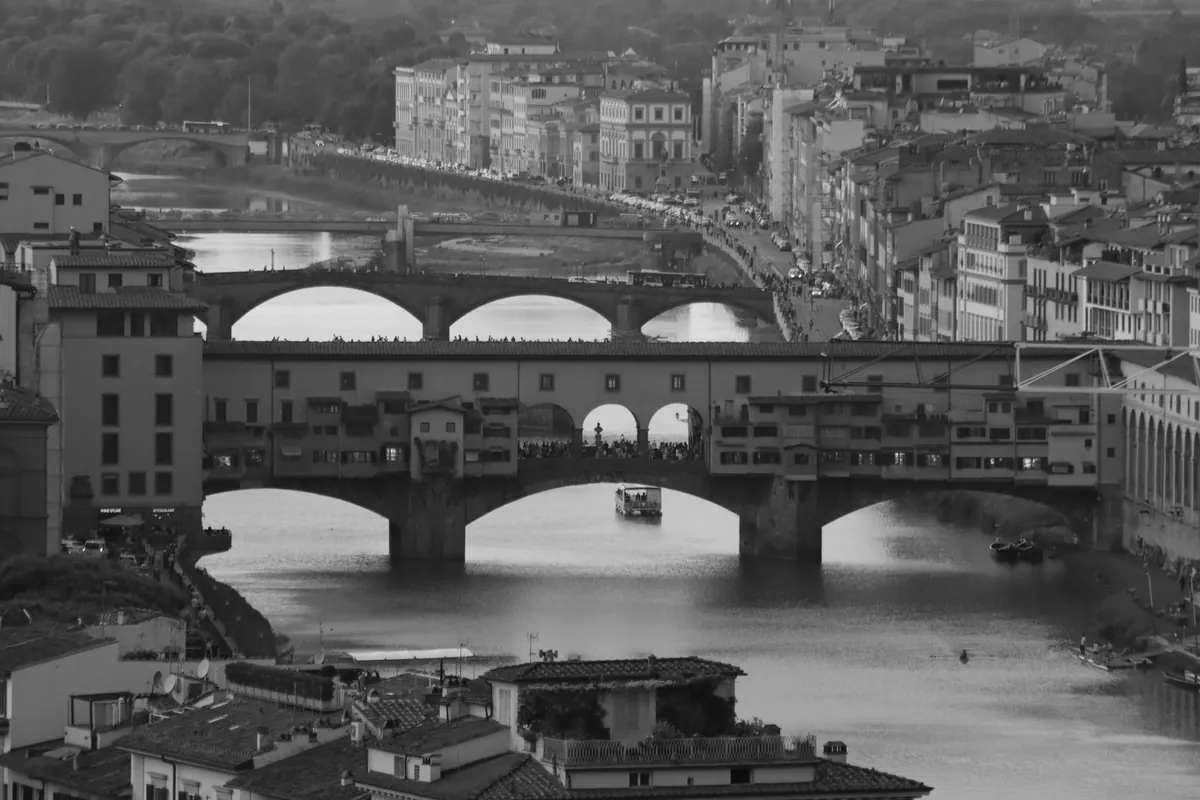
The Florentine bridge dates to 1345, and it still behaves like a piece of the city rather than a monument set apart from it. You don’t arrive at a viewpoint; you arrive at a row of goldsmiths’ windows, shutters folded back, and the Arno appearing in slices between the shops. Above, the Vasari Corridor cuts across the bridge — the private passage the Medici built in 1565 so they could move between palace and government without mingling below.
That upper corridor is why the bridge looks the way it does from the water: a closed, almost secretive box riding above the shopfronts. Stand on the opposite bank and the whole thing reads as architecture first, shops second. Walk across it and the order reverses. It’s narrow, usually packed, and over in a few minutes if you don’t stop. Stop anyway. Look west from the central opening and you get the Arno bending toward the hills, with the Santa Trinita bridge downstream.
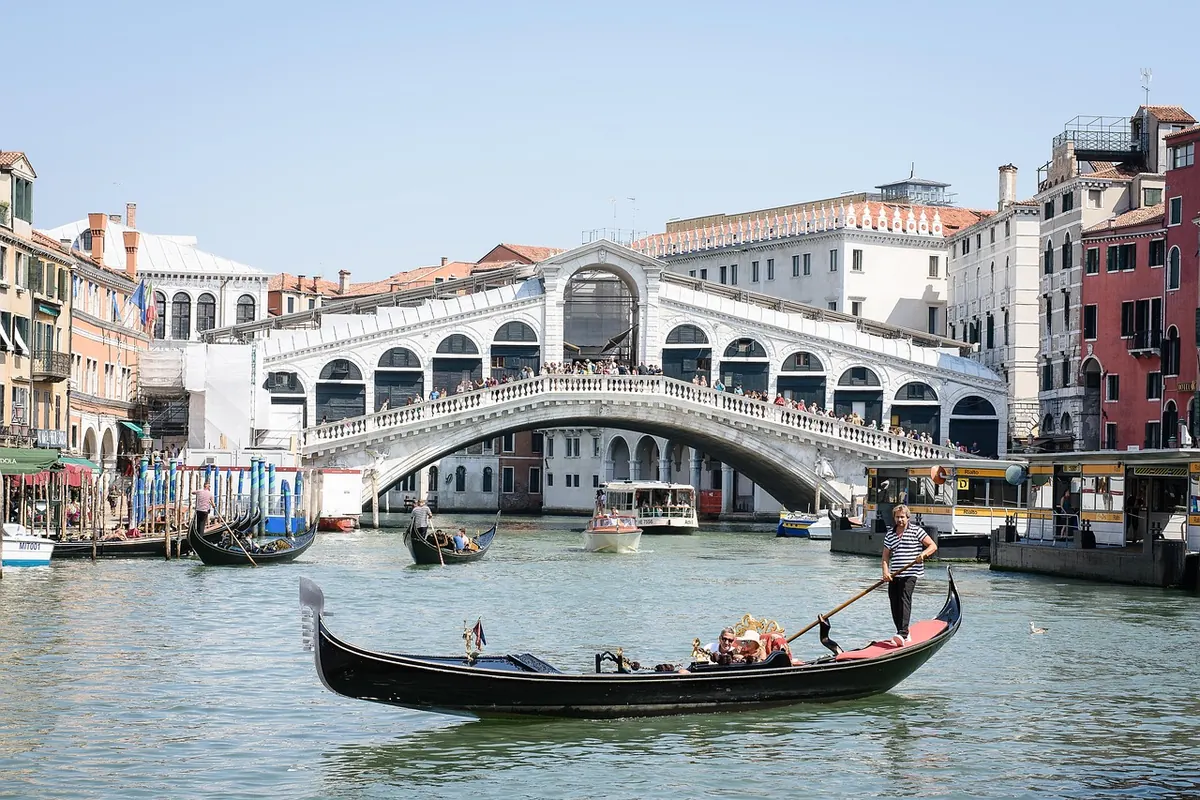
The stone Rialto was completed in 1591 to a design by Antonio da Ponte, replacing a series of wooden predecessors that kept burning or collapsing. What makes it remarkable is the single stone arch clearing the Grand Canal in one confident span, with two rows of shops climbing the sides and a porticoed centre where people once traded and now mostly stand still, looking out.
It is a Renaissance solution to a commercial problem, and it still feels like infrastructure. Gondolas and vaporetti pass beneath it. Delivery boats load on the San Marco side. The stone steps are worn into shallow hollows by four centuries of feet, and the whole bridge tilts slightly with the traffic of people rather than vehicles. Where the Ponte Vecchio hides its structure behind a street, the Rialto puts its span on display.
Cross the Ponte Vecchio at seven in the morning and you can hear the river before you hear the crowd.
Both bridges are among the busiest pieces of ground in their respective cities, but they peak differently. Florence’s tour traffic thickens from mid-morning and stays heavy until early evening; Venice adds a second wave when day visitors arrive from the mainland around late morning and again when cruise excursions move through the Rialto market area.
One practical detail: the Rialto has two sides. The San Polo approach through the market is usually jammed; the San Marco approach from Riva del Vin is often only moderately busy. If you just want to cross, enter from the quieter side.
The classic Ponte Vecchio shot is not taken from the Ponte Vecchio. Walk west to the Ponte Santa Trinita and look back east: you get the three arches, the corridor above, and the colour of the buildings in one frame. Early light is soft and the bridge is in shadow; late afternoon lights the façades. From the Ponte alle Grazie, on the other side, you get a longer view with the Uffizi roofline behind. For a wider picture, climb to Piazzale Michelangelo — twenty-odd minutes uphill — and the bridge becomes a small brown line in a much larger composition.
The Rialto is best seen from the water. Take vaporetto line 1 or 2 along the Grand Canal and stand at the back of the boat as it approaches the arch; you get the full span, the shops, and the reflection in about eight seconds. On land, the Riva del Vin curving along the San Marco bank gives a strong side view, especially at dusk. The rooftop terrace at the Fondaco dei Tedeschi, just off the San Marco end of the bridge, looks directly down on the Rialto — entry is free but timed, so reserve a slot earlier in the day.
Cross the Ponte Vecchio into Oltrarno and keep going. Via de' Bardi runs south toward Piazza Santo Spirito, a square that fills in the evening with people sitting on the church steps and children playing around them. Turn off for Piazza della Passera, a small triangular pocket of trattorie and a fountain, or head up to the Bardini Gardens and Boboli for terraces above the river. A good loop: start at Ponte Santa Trinita, walk the north bank to the Ponte Vecchio, cross, then follow the south bank back through Via de' Bardi and over the Ponte alla Carraia.
From the Rialto, walk through the market to Campo San Giacometto, where the small church of San Giacomo di Rialto sits under its wooden portico, then drift into San Polo. Campo San Polo is one of the largest squares in the city and almost empty compared with the bridge. Continue to the Frari church, or take a traghetto — the standing gondola ferry — across the canal near the market for a small fare paid on board, and you have crossed the Grand Canal the way locals did before bridges.
If you are visiting both cities on one trip, put the Ponte Vecchio first. It is smaller, more domestic, and easier to absorb in a ten-minute walk. The Rialto then becomes the bigger event, and its engineering reads more clearly once you have seen how a medieval bridge solves the same problem with a street on top.
Wear shoes with grip. Both bridges are stone, both are polished by feet, and both turn slick in rain. Carry water in summer and don’t count on finding a free bench — sitting on the parapets and steps of major monuments is discouraged or fined in both cities, and signage is not always obvious. Keep bags zipped in the middle of the crowd, especially on the Rialto steps.
Allow more time than you think. Neither crossing takes long, but both are places where people stop dead in the middle of the walkway to take a photograph, and getting irritated spoils it. Go early, cross once with attention, and then walk somewhere else. If you are booking timed museum entries in Florence, build your Ponte Vecchio visit around them rather than the other way round; in Venice, check the market days before planning your morning, since a Monday crossing gives you a very different bridge.
Photo: Efrem Efre / Pexels