Trending

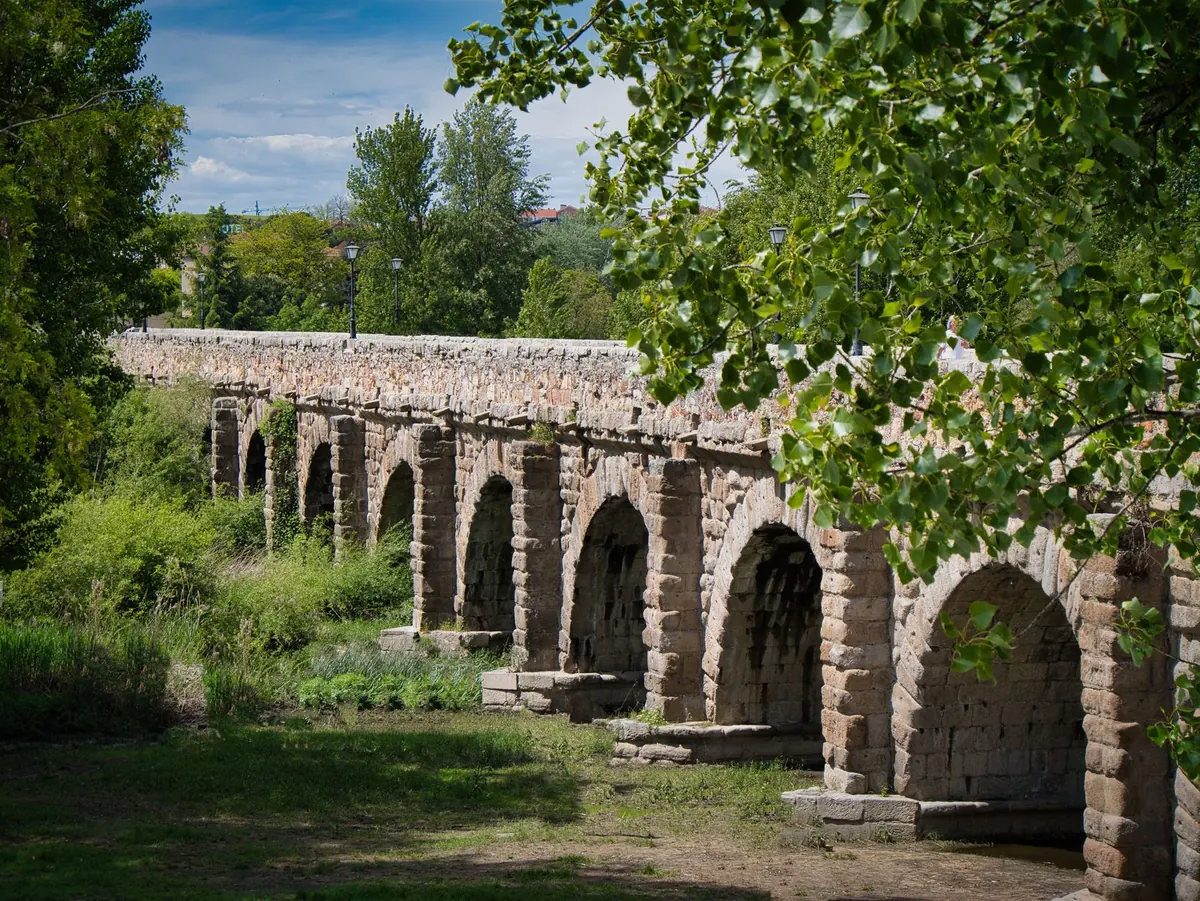
Stone bridges give up their best face in the half hour after sunrise. The light is low and raking, the river is often glassy, and the coach parties are still at breakfast. You get the grain of the masonry, the darkness under the arch, the pale sky above the parapet — all without a single raised phone in the frame. The catch is that the window is short and unforgiving. Arrive forty minutes late and the same bridge flattens into a contrasty snapshot. What follows is the working method: how to pick the moment, where to put the tripod, and how to expose so the stone keeps its colour.
At sunrise the sun sits close to the horizon, so its light travels through more atmosphere and arrives warmer and softer than it will at ten in the morning. More importantly, it hits the bridge at a shallow angle. That raking light is what shows the thing you came for: mortar joints, chipped edges, tool marks, the pale streaks where water has run for six hundred years. Front-lit at midday, a stone bridge looks like a wall. Side-lit at dawn, it looks built by hands.
There are practical bonuses too. Wind usually picks up after breakfast, so reflections hold together longer. River traffic and rowing clubs are still asleep. And the shadows stay cool and blue, because they are lit only by the sky — that warm-stone-against-cool-shadow contrast is most of the mood.
You will not have the place to yourself. Dog walkers, bakers, fishermen and the occasional cyclist turn up early, and they are worth having: a figure on the far parapet gives scale and a sense of how big the arches really are.
Sunrise in Italy falls somewhere between shortly before six in midsummer and around half past seven in midwinter, so the alarm changes with the season. Check the exact time for your date and subtract forty-five minutes — that gives you the blue hour, when the sky is deep and street lamps are still burning, and time to walk to your position without hurrying.
Then work out the geometry. A bridge has two long faces and two ends, and only one of them will be lit. Use a sun-position app or a simple compass to see where the sun will break the horizon relative to the bridge's axis. If the sun rises behind the bridge, you have a backlit silhouette — dramatic, especially with river mist, but a different photograph and a harder exposure. If it rises along the river rather than across it, the faces will stay in shade and you will be shooting soft, cool light rather than warm light. Neither is wrong; you just need to know before you set the alarm.
Weather matters as much as timing. A perfectly clear dawn gives clean colour but little drama. Broken cloud is better: it catches colour, and it keeps the light changing so you get several different pictures in twenty minutes. Rain the day before is a gift, because wet stone darkens and saturates. Autumn mist is the finest condition of all, and it burns off quickly — on those mornings, arrive early.
The afternoon before, walk both banks slowly with your phone camera. You are looking for three things: a place to stand that is safe and legal, an unobstructed sightline to the arch, and foreground. Check whether riverside steps and platforms are open, whether gates are locked until a certain hour, and where you can park without a ten-minute walk. Note the street lamps that will glow during blue hour and might smear across a long exposure. Look at the rubbish bins, signposts and parked cars that will clutter the edge of the frame.
In historic centres, keep the footprint small. Some Italian towns are sensitive about tripods blocking narrow pedestrian routes, and professional-looking shoots can attract attention. Be quick, stay out of doorways, and ask if someone in uniform tells you to move.
The default photograph is the centred, symmetrical view from the bank, and it is the one every visitor takes. Use it as a safety shot, then move.
Sunlit limestone and deep shade under an arch are a wide range to hold at once. Expose for the brightest stone — the histogram should just touch the right edge without clipping — and accept that the shadows will look dark on the back of the camera. Shadow detail can be recovered from a raw file; blown highlights cannot. Bracket three frames a stop apart whenever the sun is in or near the frame, and blend them later if one exposure won't do.
Settings that work reliably: ISO 100, aperture around f/8 to f/11 for corner sharpness, a tripod, and either a remote release or the two-second delay. Focus with live view magnified on the bridge deck rather than trusting autofocus in low contrast.
A polariser does two jobs here. It cuts the sheen on wet stone so the colour comes through, and it controls how much of the sky reflects in the river — rotate it slowly and watch the viewfinder rather than following a rule. With very wide lenses, check the corners: polarisers can leave one side of the sky uneven. For the river itself, a six-stop neutral density filter and an exposure of a few seconds softens the surface while keeping the current visible. Exposures of half a minute turn water into milk, which reads as a dated effect on a Roman arch.
Finally, watch flare. Keep the hood on, shade the front element with your hand or a card when shooting towards the sun, and wipe the lens — river damp and morning mist settle fast.
Florence's Ponte Vecchio rewards an early start: the reflections on the Arno hold best before the first breeze, and the corridor above the shops catches colour before the river does. Rome's Ponte Sant'Angelo gives you the angel statues against a brightening sky. Verona's Ponte Pietra, with its Roman arches over the Adige, has the hills behind it as a backdrop. Bobbio's Ponte Gobbo, with its humped, uneven spans, suits a low angle from the shingle. The Ponte delle Torri at Spoleto is a different problem — it sits in a gorge, so direct light arrives well after sunrise and the best hour is often later than you'd think. Check orientation yourself for each one; the sun's position shifts through the year, and last summer's perfect spot may be in shade this June.
Then set the alarm, get out the door, and give yourself a few minutes to stand still before you raise the camera. The best frame of the morning is often the one you spot while the light is still doing something you didn't plan for.
Photo: image149 studio / Pexels